
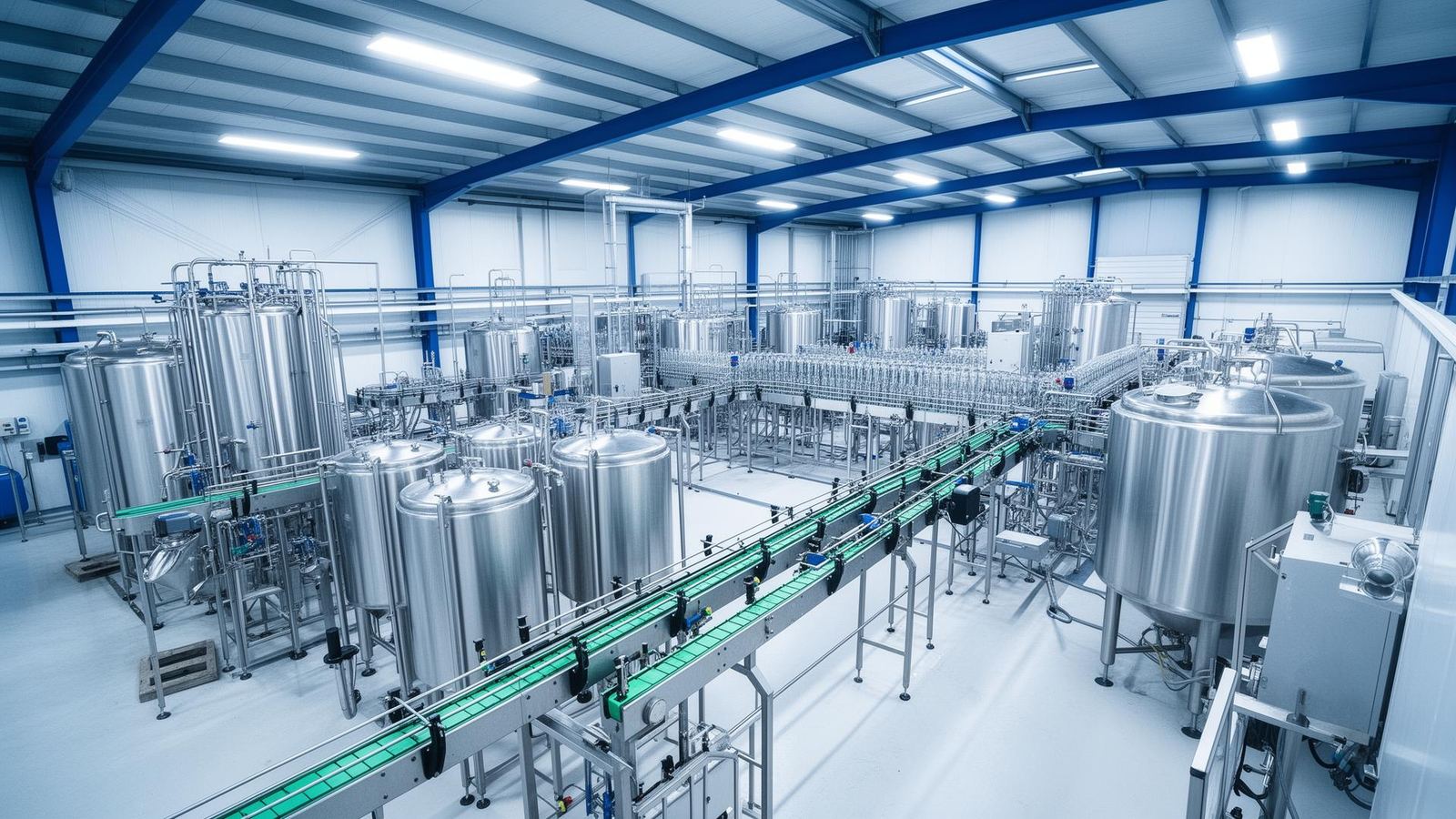
Pasteurization in Beverage Production
Pasteurization tunnels provide thermal treatment to filled and sealed containers, ensuring microbiological stability and extending shelf life. They are essential equipment for beer, juice, tea, and other beverages requiring post-fill pasteurization. Used pasteurization tunnels from established manufacturers represent major capital equipment that can operate for decades when properly maintained.
Types of Pasteurization Equipment
| Type | Process | Typical Application |
|---|---|---|
| Tunnel pasteuriser | Containers pass through heating, holding, and cooling zones | Beer, juice in glass or cans |
| Flash pasteuriser | Product heated before filling in a plate heat exchanger | Wine, juice, sensitive beverages |
| Spray pasteuriser | Hot water sprays in a tunnel configuration | Small to medium production volumes |
Critical Inspection Points
- Zone temperature control — each heating and cooling zone must maintain precise temperature profiles
- Spray nozzle condition — blocked or worn nozzles cause uneven temperature distribution
- Water circulation system — pumps, filters, and heat exchangers must be in good condition
- Belt or chain conveyor — the transport system operates in a hot, wet environment and degrades faster than dry conveyors
- PU (Pasteurization Unit) monitoring — verify the PU measurement and recording system functions correctly
- Insulation and energy recovery — heat recovery systems significantly impact operating costs
- Water treatment — the recirculated water system requires proper treatment to prevent scaling and corrosion
Common Issues
Problems to Watch For
- Corroded spray headers and nozzles causing uneven pasteurization — potential food safety risk
- Inadequate PU monitoring meaning actual pasteurization levels cannot be verified
- Degraded insulation increasing energy consumption significantly
- Water system scaling reducing heat exchange efficiency
- Belt or chain wear causing container instability and potential breakage in the tunnel
Frequently asked questions
How many pasteurization units (PU) are needed?
Required PU levels depend on the product and target shelf life. Beer typically requires 15-30 PU, while juices may require higher levels. The tunnel must be sized to deliver the required PU at your production speed. Always verify PU capability during inspection.
What is the energy consumption of a pasteurization tunnel?
Pasteurization tunnels are energy-intensive equipment. Energy consumption depends on throughput, PU requirement, and heat recovery efficiency. Modern heat recovery systems can reduce energy consumption by 30-50% compared to older designs without recovery.
Can a tunnel pasteuriser handle different container types?
Most tunnel pasteurisers can handle glass bottles, cans, and PET containers with appropriate conveyor and guide adjustments. However, PET containers may have temperature limitations that restrict pasteurization parameters.