The Overlooked Backbone of Every Bottling Line
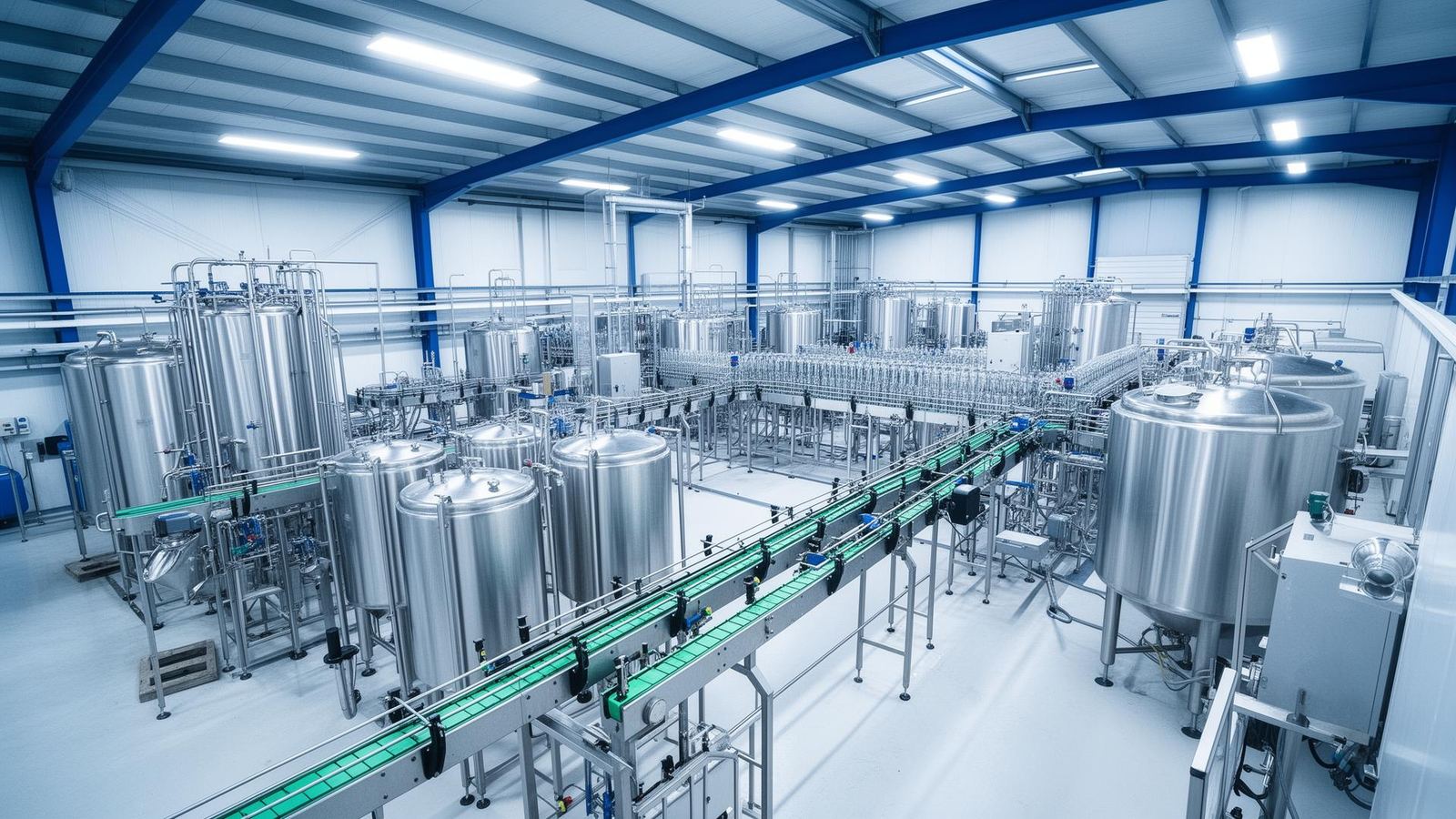
Conveyors represent the single largest physical component of any bottling line, yet they receive the least attention during used equipment evaluations. A filler running at 20,000 BPH is useless if conveyor systems cannot reliably transport containers between machines.
Conveyor Types in Bottling
| Type | Application | Key Issues |
|---|---|---|
| Air conveyor | PET preform/empty bottle transport | Blower condition, neck guide wear |
| Slat-band | Filled container transport | Chain elongation, guide rail wear |
| Mat-top | Heavy containers, glass | Hinge pin wear, tracking |
| Accumulation table | Buffer between machines | Motor condition, pressure plate wear |
| Lowerator/elevator | Level changes | Chain tension, guide alignment |
Chain Wear Measurement
Chain elongation is the primary indicator of conveyor condition. Measure over a 10-link span and compare to nominal pitch. Chains elongated beyond 2% typically require replacement. On a complete bottling line, full conveyor chain replacement can cost €10,000–€30,000.
Drive System Assessment
- Gearbox oil condition and noise levels
- Motor current draw at rated speed
- Variable frequency drive (VFD) condition
- Sprocket tooth wear pattern
- Emergency stop functionality on each section
Guide Rail Condition
Guide rails channel containers through curves, transfers, and accumulation zones. Worn rails create container instability, jamming, and damage. UHMW-PE (ultra-high molecular weight polyethylene) guides are consumable items — check for groove wear depth exceeding 1mm.
Frequently asked questions
How often should conveyor chains be replaced?
Depending on speed, load, and maintenance, conveyor chains typically last 3–7 years. Monitor elongation regularly and replace when exceeding 2% of nominal pitch.
Can I mix conveyor manufacturers in one line?
Yes, but ensure compatible chain types, working heights, and control interfaces. Standardising on one conveyor supplier simplifies spare parts management.
What is the most common conveyor problem?
Chain elongation and guide rail wear are the most frequent issues, causing container jams and line stoppages.