
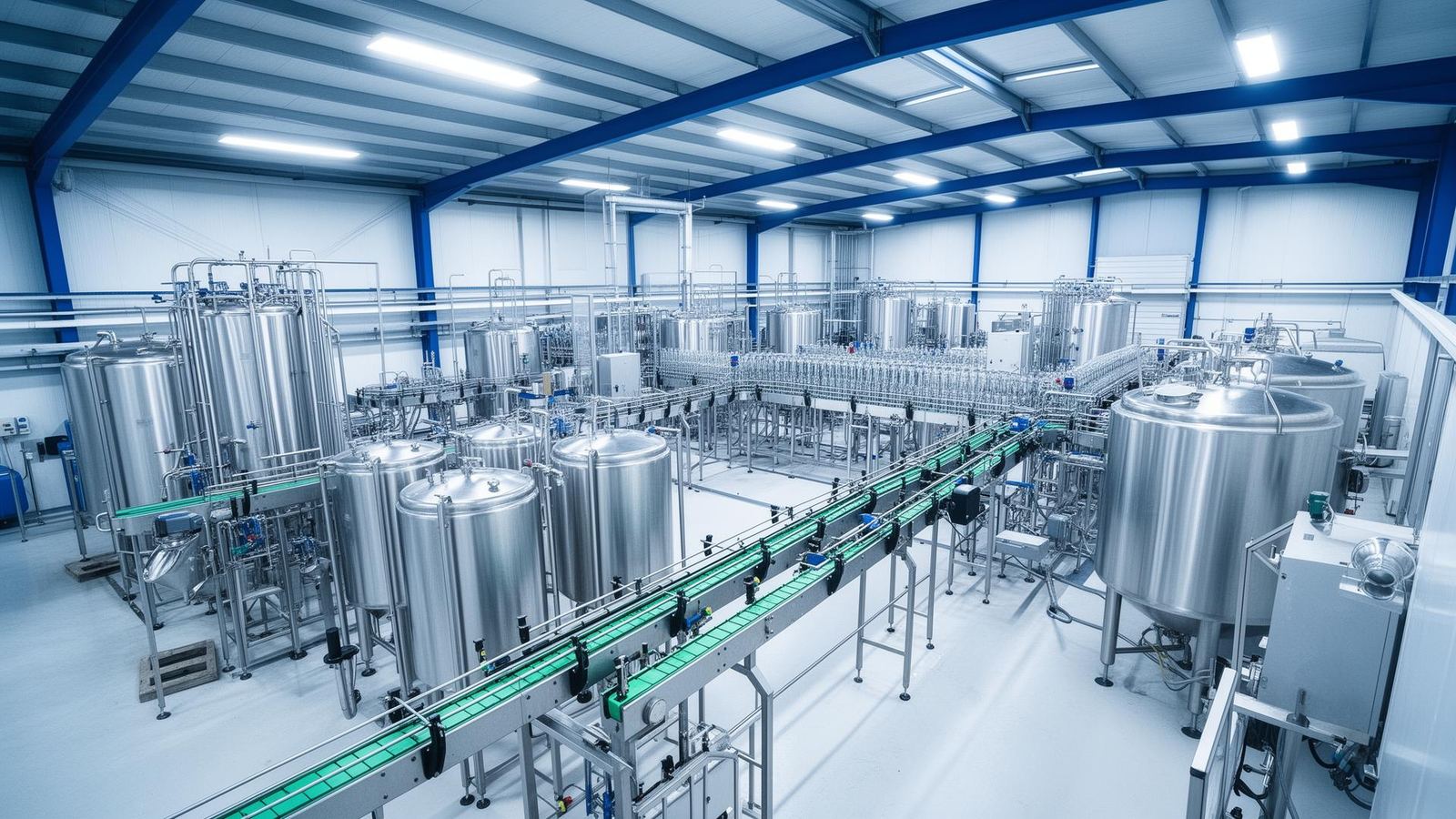
The Importance of Bottle Washers in Production Lines
Bottle washers are critical for returnable glass bottle operations and are also used for new glass bottles to remove warehouse dust and residues. Large-scale washers from manufacturers across Europe represent significant engineering and can provide decades of reliable service when properly maintained. Used bottle washers are frequently available as breweries and soft drink producers modernise their lines.
Washer Types and Configurations
| Type | Description | Typical Speed |
|---|---|---|
| Single-end | Bottles enter and exit from the same end | Up to 30,000 BPH |
| Double-end | Bottles enter one end and exit the other | Up to 80,000+ BPH |
| Hydro washer | Compact design with water-only rinsing | Up to 20,000 BPH |
| Crate washer | Washes bottle crates separately | Matched to bottle washer |
Critical Inspection Points
- Carrier pocket condition — worn pockets cause bottle breakage and jams inside the washer
- Caustic solution system — check tank lining integrity, heating system efficiency, and chemical dosing controls
- Spray nozzle arrays — blocked or worn nozzles reduce cleaning effectiveness and increase water consumption
- Label extraction system — verify the label float-off and collection system works efficiently
- Chain and sprocket condition — the main transport chain is the most expensive wear component
Energy and Water Considerations
Bottle washers are among the most energy and water-intensive machines in a bottling plant. Evaluate the heat recovery system, insulation condition, and water recirculation circuits. Modern upgrades such as improved insulation, VFD-driven pumps, and optimised spray patterns can significantly reduce operating costs on older machines.
Common Issues
Problems to Watch For
- Corroded caustic tanks — internal lining failure leads to expensive repairs or tank replacement
- Worn carrier pockets causing increased bottle breakage rates
- Inadequate label removal causing labels to enter downstream equipment
- Heat recovery system failures increasing energy costs significantly
- Chain elongation beyond service limits requiring complete replacement
Frequently asked questions
How long does a bottle washer last?
Well-maintained bottle washers from established manufacturers can operate for 30-40 years or more. The frame and tanks are extremely durable. Wear components such as carriers, chains, and nozzles require periodic replacement.
What utilities does a bottle washer require?
Bottle washers require significant utilities: steam or hot water for heating caustic solution (typically 65-80°C), fresh water for rinsing stages, electricity for drives and pumps, and caustic soda supply. Energy consumption is a major operating cost factor.
Can a bottle washer handle both glass and PET bottles?
Bottle washers are designed for glass bottles. PET bottles cannot withstand the high temperatures and caustic solutions used in standard washers. PET bottles are typically rinsed with air or water rinsers instead.