
Dairy Filling Equipment: Hygiene-First Engineering
Milk and dairy products are among the most microbiologically sensitive foods. Filling equipment for dairy must meet the most stringent hygienic design standards in the food industry. Used dairy filling lines from manufacturers such as Tetra Pak, GEA, Krones, Elopak, SIG Combibloc, and Serac offer established technology at reduced investment, but require particularly careful evaluation of hygienic condition and sterilisation system integrity.
The dairy equipment market is segmented by product type: fresh milk, ESL (extended shelf life) milk, UHT milk, yogurt, cream, and flavoured dairy drinks. Each product requires different filling conditions, from ultra-clean to fully aseptic.
Dairy Filling Categories
| Product | Filling Environment | Shelf Life | Typical Equipment |
|---|---|---|---|
| Fresh pasteurised milk | Ultra-clean | 7–14 days (refrigerated) | Clean-fill bottle or carton filler |
| ESL milk | Ultra-clean or aseptic | 21–45 days (refrigerated) | Micro-filtration + clean fill |
| UHT milk | Fully aseptic | 6–12 months (ambient) | Aseptic carton or bottle filler |
| Yogurt (set/stirred) | Clean fill | 21–35 days (refrigerated) | Cup filler with dosing system |
| Cream | Ultra-clean | 14–21 days (refrigerated) | Volumetric filler with temperature control |
| Flavoured milk | Ultra-clean or aseptic | Varies by treatment | As per base product requirements |
UHT Processing Equipment
Ultra-high temperature (UHT) processing heats milk to 135–150°C for 2–4 seconds, achieving commercial sterility. Used UHT plants from GEA, Tetra Pak, and APV/SPX are high-value assets that require expert evaluation. Check heat exchanger plate condition, holding tube integrity, and homogeniser valve wear. UHT equipment has long service life if properly maintained.
What Dairy Producers Search For
- Used UHT milk processing plant — complete ultra-high temperature treatment line
- Used milk filling machine — aseptic or clean-fill for dairy products
- Used Tetra Pak filling machine — TBA or TFA series for carton packaging
- Used yogurt filling machine — cup filler and lid sealer for dairy desserts
- Used cream filling equipment — volumetric filler for cream and sour cream
- Used dairy homogeniser — high-pressure homogeniser for milk processing
- Used milk pasteuriser — plate heat exchanger for dairy pasteurisation
- Used CIP system for dairy — automated cleaning for dairy production
- Used dairy separator — centrifugal separator for cream separation
- Used cheese processing equipment — vats, presses, and moulding equipment
Hygienic Design Verification
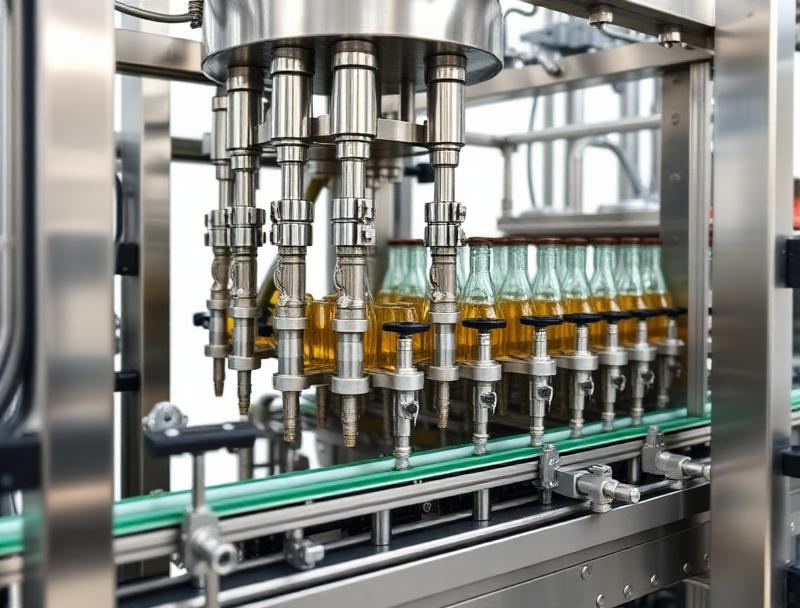
When purchasing used dairy equipment, hygienic design is non-negotiable. Inspect all product-contact surfaces for pitting, scratching, or roughening that could harbour bacteria. Surface finish should be Ra ≤ 0.8 µm on product-contact areas. Check all welded joints for smooth orbital welds without crevices. Verify that all gaskets are in food-grade condition without compression set or swelling.
The sterilisation system is critical: for aseptic equipment, verify the H₂O₂ (hydrogen peroxide) spray system, steam barriers, and sterile air supply. These systems require calibration and validation documentation. Missing documentation significantly reduces the value and usability of used aseptic dairy equipment.
Frequently asked questions
How much does a used UHT milk line cost?
Used UHT processing plants (excluding filling) typically cost €150,000–€500,000 depending on capacity and condition. Complete UHT filling lines including Tetra Pak or bottle filling can range from €300,000 to over €1,000,000. Individual UHT filling machines start from €80,000–€200,000.
Can I use standard beverage equipment for milk?
No. Milk requires equipment specifically designed for dairy hygiene standards, including food-grade surface finishes (Ra ≤ 0.8 µm), dairy-specific CIP protocols, and appropriate filling environment classification. Standard beverage fillers lack the hygienic design features required for safe dairy production.
What is the difference between clean fill and aseptic fill for dairy?
Clean fill operates in a controlled but not sterile environment, suitable for pasteurised products with refrigerated distribution. Aseptic fill uses a fully sterile filling zone with pre-sterilised containers, enabling ambient shelf life. Aseptic equipment is significantly more complex and expensive than clean-fill alternatives.