
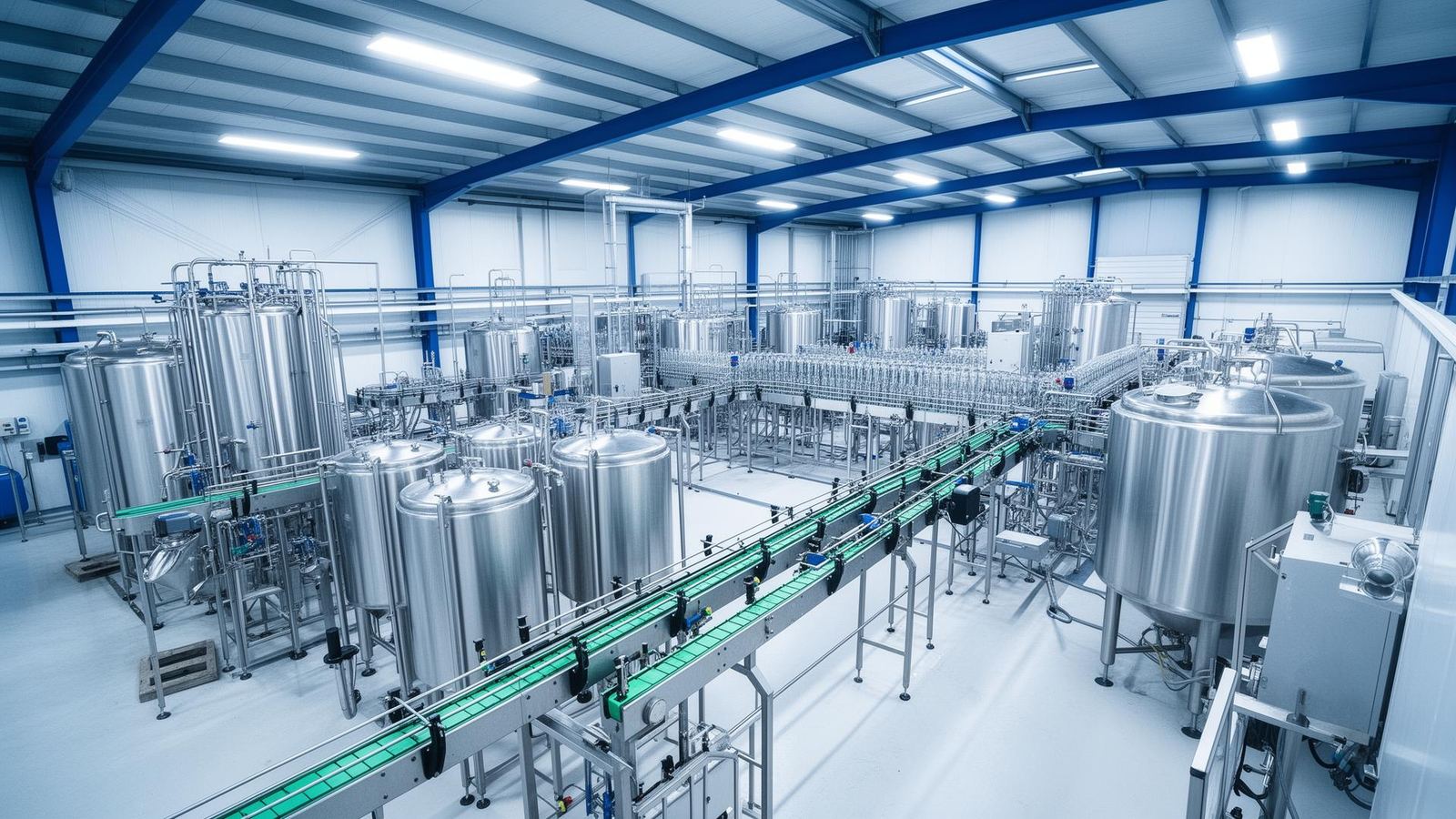
Washer-Dryers in Bottling Lines
Washer-dryers remove moisture from containers after rinsing, washing, or pasteurization — and before labelling or coding operations. Dry container surfaces are essential for reliable label adhesion and legible ink-jet printing. Used washer-dryers are practical, cost-effective machines that significantly improve downstream production quality.
Drying Technologies
- Air knife dryers — high-velocity air blades remove water from container surfaces
- Blower dryers — heated or ambient air blown through a tunnel section
- Sponge dryers — rotating sponge rollers absorb surface moisture
- Vacuum dryers — remove moisture using vacuum suction
- Combination systems — use multiple methods for thorough drying
Critical Inspection Points
- Air knife condition — nozzle alignment and air velocity must provide consistent drying
- Blower motor and fan — check for bearing wear, vibration, and air flow capacity
- Heating elements — if heated air is used, verify element condition and temperature control
- Water collection and drainage — effective moisture removal from the machine interior
- Container handling — the drying system must not damage or destabilise containers on the conveyor
Common Issues
Problems to Watch For
- Insufficient drying causing label adhesion failures downstream
- Worn air knife nozzles reducing drying effectiveness
- Blocked drainage causing water accumulation inside the dryer
- Heating element failures in heated dryer systems
- Excessive energy consumption from oversized or inefficient blower systems
Frequently asked questions
Is a dryer essential after rinsing?
Yes, for most applications. Wet containers cause label adhesion problems, ink-jet code smearing, and potential corrosion of closures. Even air-rinsed containers may benefit from a drying step before labelling.
What drying method is most effective?
Air knife systems are the most efficient and widely used for high-speed lines. They provide targeted, high-velocity air that removes water without contact. Sponge dryers are simpler but require regular sponge replacement and are more suitable for lower speeds.
How much energy does a container dryer consume?
Energy consumption varies by type. Air knife systems using ambient air are the most efficient. Heated air systems consume more energy but dry more effectively in cold or humid environments. Size the dryer to match your line speed to avoid oversized, energy-wasting installations.