
The Water Bottling Equipment Market
Bottled water is the worlds largest beverage category by volume, and demand continues to grow globally. Setting up a water bottling plant — whether for natural mineral water, spring water, purified water, or flavoured water — requires significant capital investment. Used water bottling equipment from manufacturers such as Sidel, Krones, KHS, SIPA, SMI, and Newamstar can reduce initial investment by 40–60% while delivering equivalent production capability.
Water bottling lines are predominantly PET-based, although glass bottles remain popular in the premium and HoReCa (hotel, restaurant, catering) segments. The vast majority of water bottling operations worldwide use PET containers ranging from 200ml to 10 litres.
Complete Water Bottling Line Configuration
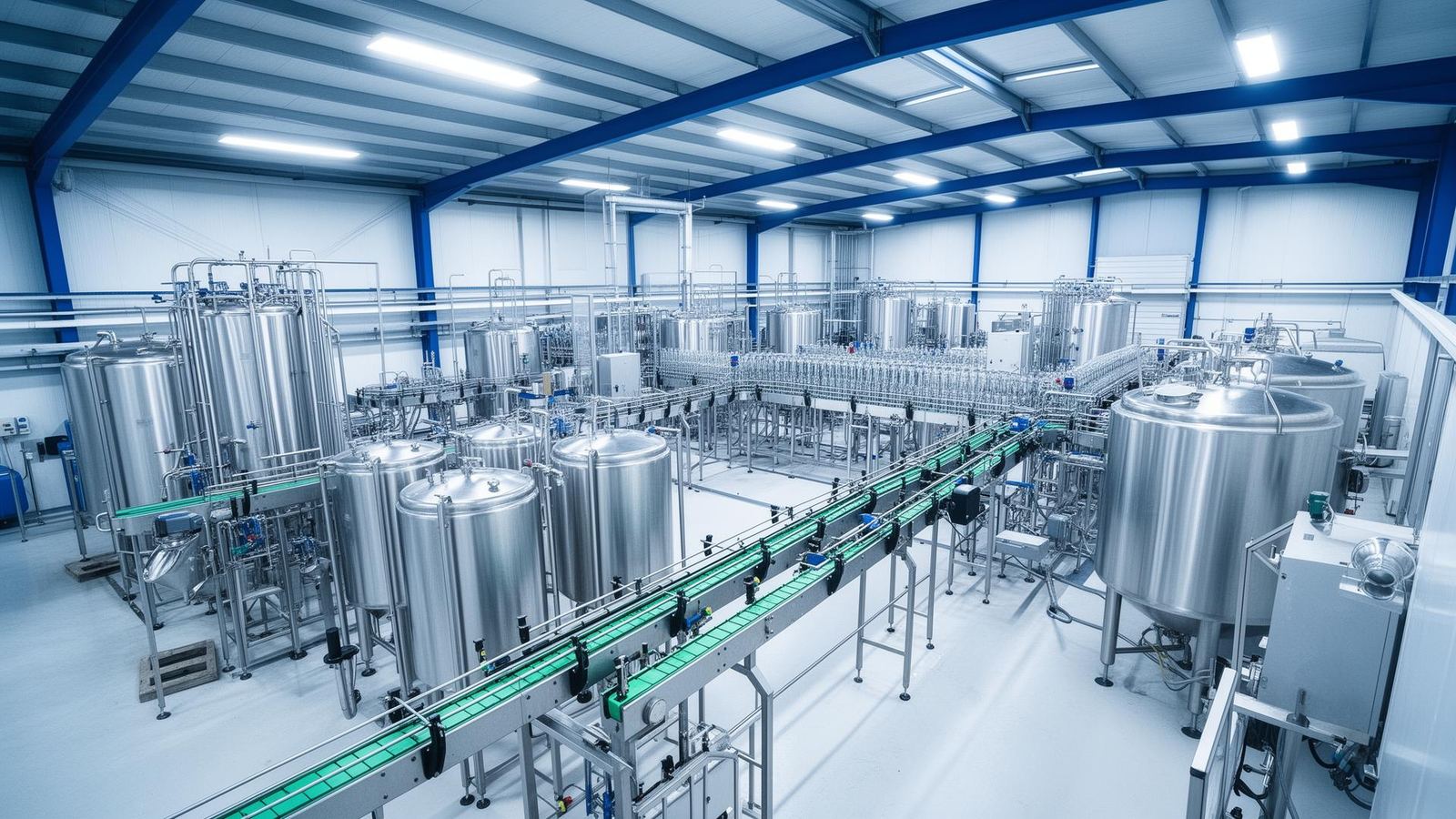
A typical water bottling plant includes the following equipment chain. Each stage must maintain hygienic standards to preserve water purity from source to consumer.
| Stage | Equipment | Critical Parameters |
|---|---|---|
| Water treatment | Filtration, UV, ozone systems | Microbial control, mineral content preservation |
| Preform storage | Preform hoppers and elevators | Dust-free handling, static control |
| Blow moulding | PET blow moulder | Oven temperature uniformity, mould condition |
| Filling | Gravity or pressure filler | Fill accuracy, hygienic design, CIP capability |
| Capping | Screw capper | Torque consistency, cap feeding reliability |
| Labelling | Self-adhesive or shrink sleeve | Label placement accuracy, sleeve shrink uniformity |
| Coding | Inkjet or laser | Print quality, batch traceability |
| Packing | Shrink wrapper or tray packer | Film quality, pack integrity |
| Palletising | Automatic palletiser | Layer pattern flexibility, stack stability |
PET Blow Moulding for Water Bottles
The PET blow moulder is often the most expensive single machine in a water bottling line. Used blow moulders from Sidel (SBO series), Krones (Contiform), KHS (InnoPET Blomax), and SIPA represent substantial savings. When evaluating used blow moulders, focus on oven lamp condition, stretch rod alignment, high-pressure air valve integrity, and mould cavity wear.
Water Filling Technology
Still Water Filling
Still water uses gravity or slight-pressure filling technology. Modern volumetric fillers with electromagnetic flowmeters provide high accuracy (±0.5%) at speeds up to 80,000 BPH. Used gravity fillers from manufacturers like Krones (Modulfill VOC), Sidel, and KHS offer excellent value for still water applications.
Sparkling Water Filling
Carbonated water requires counter-pressure (isobaric) filling, similar to beer and soft drinks. The filler must handle CO₂ under pressure without excessive foaming. Used isobaric fillers from Krones, KHS, and other manufacturers are available but command higher prices than still-water fillers due to more complex valve technology.
What Water Producers Search For
- Used water bottling plant complete — turnkey water production line
- Used PET blow moulder for water bottles — SBO, Contiform, or equivalent
- Used water filling machine — gravity or volumetric filler for still water
- Used mineral water bottling line — complete line for natural mineral water
- Used 5-litre / 10-litre water filling machine — large format water containers
- Used water bottle labelling machine — shrink sleeve or self-adhesive
- Used water treatment equipment — reverse osmosis, UV sterilisation, ozonation
- Used carbonated water filling line — isobaric filler for sparkling water
Hygiene and Regulatory Requirements
Water bottling is subject to strict regulatory oversight in most jurisdictions. Equipment must support compliance with regulations such as EU Directive 2009/54/EC for natural mineral water, FDA 21 CFR 165 in the US, or equivalent national standards. When purchasing used equipment, verify that hygienic design meets current standards: product-contact surfaces must be smooth (Ra ≤ 0.8 µm), all connections should be sanitary fittings, and the CIP system must reach all product-contact areas.
Frequently asked questions
How much does a used water bottling plant cost?
A small used water bottling plant (2,000–4,000 BPH) typically costs €80,000–€200,000 including blow moulder, filler, capper, and labeller. Medium plants (8,000–15,000 BPH) range from €200,000–€500,000. High-speed plants (20,000+ BPH) can exceed €1,000,000 depending on configuration.
Do I need a blow moulder for water bottling?
If using PET bottles, yes — unless you purchase pre-blown bottles from a supplier, which increases per-bottle cost. Most water bottling plants above 3,000 BPH include an integrated blow moulder for economic efficiency. For small operations, buying pre-blown bottles and using only a filler-capper can be a lower-investment starting point.
What water treatment do I need before bottling?
This depends on your water source. Natural mineral water typically requires only UV treatment and filtration. Purified water requires reverse osmosis, activated carbon filtration, and UV or ozone treatment. Always test your source water and design treatment accordingly.
Can I bottle still and sparkling water on the same line?
Some fillers can handle both, but switching between still and carbonated modes requires changeover time. Many producers operate dedicated lines for each product type to maximise efficiency.